|
|
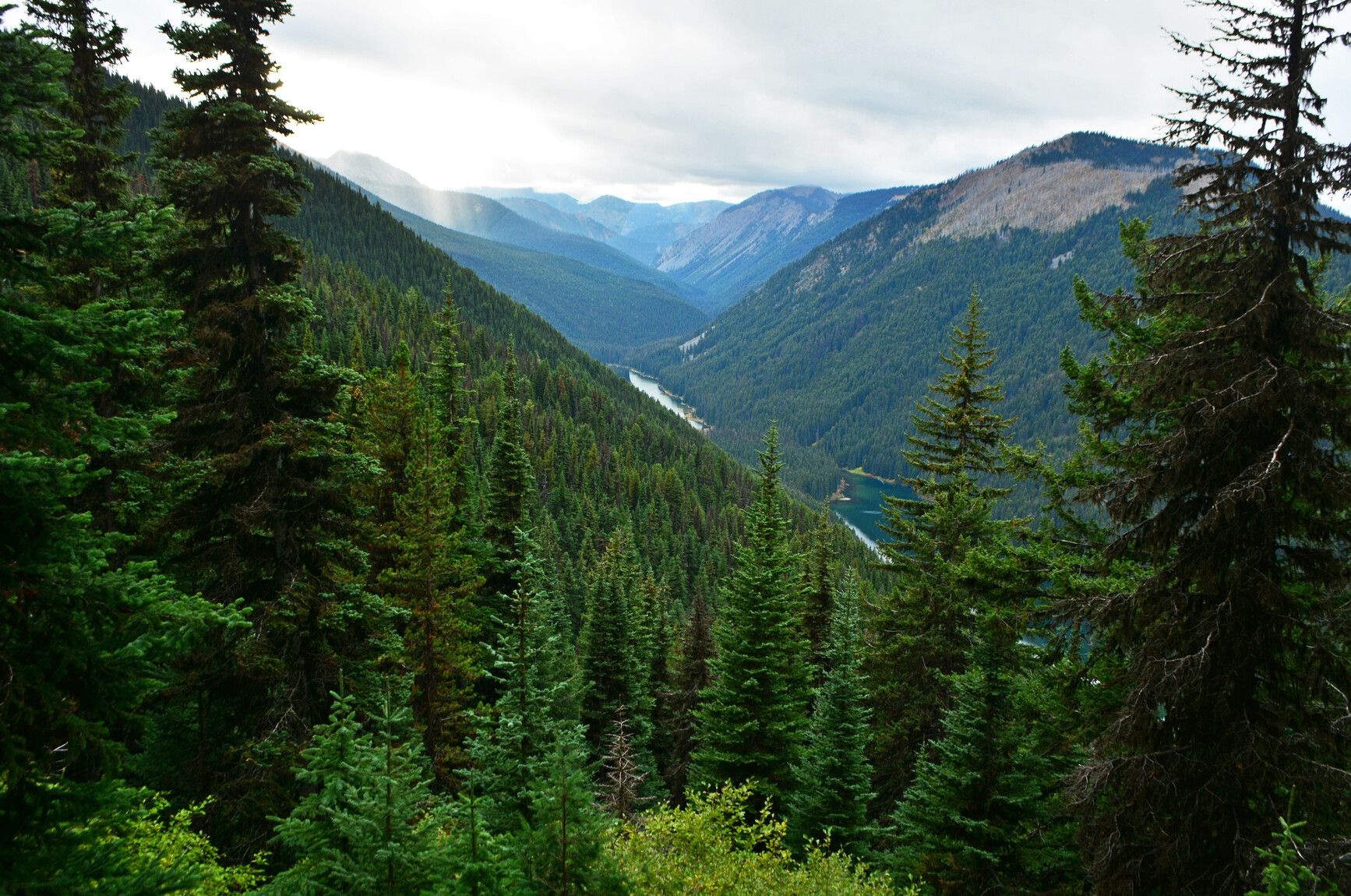
E.C. Manning Provincial Park, British Columbia |
In September 2025, multiple wildfires were observed near E.C. Manning Provincial Park, BC, highlighting the increasing prevalence and intensity of wildfires in the region.
Over the last weekend on Friday September 19th, 2025, I was driving home to Vancouver from a trip to visit family in Greenwood, British Columbia (BC) using what is known as the Crowsnest Highway, or Highway 3. This highway stretches west to east from Hope, BC in the outer Fraser Valley, through E.C. Manning Provincial Park (sometimes referred to as Manning Park) and past Manning Park Resort, through the Similkameen Valley, Osoyoos, and into Boundary Country (Crowsnest Tourism Alliance, 2025). As we were travelling home through this route heading west in Manning Provincial Park boundaries, we noticed far off in the distance a column of smoke. As we drove closer to Manning Park Resort, we realized the wildfire was quite close to the resort in the south-east direction where we were stopping for lunch. At the resort the restaurant manager indicated that the wildfire nearby was contained, however while you could still see the sun and blue sky you could smell the heavy smoke in the air. As we drove towards Hope, we noticed two other separate columns of smoke in the sky, and upon investigating with the BC Wildfire Service found out that there was another fire that we didn’t notice, bringing the total fires in the Manning Park area to five, excluding the wildfires on the nearby Coquihalla. These fires were identified using the BC Wildfire Service map, and were identified as the Holding Creek wildfire, the Placer Creek wildfire, the V12007 wildfire (the first fire that I personally noticed), and the V1168 wildfire.
Global Context and Analysis
While some still discuss climate change as a future problem, the truth is that we are already experiencing some of the impacts of climate change today, one being the increase in extreme weather events including wildfires. With climate change causing an increase in greenhouse gases and modifying global processes such as the global temperature, atmosphere composition, ocean dynamics, and others, it is causing changes to weather patterns worldwide (Masson-Delmotte et al., 2021). These changes include “hot extremes (including heatwaves) …. becom[ing] more frequent and more intense across most land regions since the 1950s, while cold extremes (including cold waves) have become less frequent and less severe” (Masson-Delmotte et al., 2021), increasing frequency and severity of rainfall and precipitation, increasing frequency and severity of drought, increase in extreme weather events like tropical cyclones, reduction in sea ice cover, and increased wildfires and fire weather. For wildfires in particular, extreme wildfires have been found to have doubled worldwide, with wildfires becoming more intense, more frequent, and larger (NASA, 2025). Across North America, the number of wildfires and the area burned have both increased, with the latest wildfire season in Canada classifying as the second-worst fire season on record by early-August (Bowden, 2025; Wang et al., 2017).
These trends hold true for the province of British Columbia (BC), where Manning Park is located, which has experienced it’s four most severe wildfire seasons since 2017 (not including data from 2024 or 2025) (Parisien et al., 2023). Particular notable extreme heat events include a higher presence of overwintering fires in 2024, the warmest temperature recorded north of the 45th parallel in Lytton in 2021, a heat dome in 2021 that covered western North America, the McDougall Creek Wildfire in 2023 which caused the evacuation of over 10,000 residents of West Kelowna, and out-of-control wildfires causing the closure of the Coquihalla, a major BC highway, just last month (BC Wildfire Service & Province of British Columbia, 2025; CBC, 2025; City of West Kelowna, 2024; Parisien et al., 2023). In addition, BC has been experiencing a rainfall deficit, causing “climates of BC [to] become more conducive to fire since ~2000 compared to previous decades” (BC Wildfire Service & Province of British Columbia, 2025; Parisien et al., 2023). The observation of multiple wildfires present in the E.C. Manning Provincial Park region aligns with these trends both in Canada and throughout the globe in the increase of extreme weather events.
These patterns have important implications for the future of wildfire management as the climate continues to change. In BC alone, fire-mitigation and management has evolved from a seasonal issue to year-round, with the BC Wildfire Service growing into a year-round organization, the introduction of the Crown Land Wildfire Risk Reduction program, and the implementation of a wildfire prevention program through FireSmart BC (BC Wildfire Service & Province of British Columbia, 2025). The province has also been exploring the implementation of traditional ecological knowledge into fire mitigation and management, in particular the role that cultural burnings have played in wildfire mitigation in Indigenous communities for millennia (BC Wildfire Service & Province of British Columbia, 2025; Dreaver, 2025). As E.C. Manning Provincial Park is situated in the Cascade Mountains region on the lower border of British Columbia that is shared with the United States, it will be imperative to ensure the region has effective wildfire mitigation and management protocols that can be adapted for cross-border wildfire response and for nearby communities.
|
|
Hailey Boehner
|
|
|
New out-of-control wildfire south of Port Alberni grows to 630 hectaresPort Alberni, British Columbia, Canada
Aug 11, 2025
Event
|
|
|
Out-of-control wildfire near Port Alberni grows to 15 hectares, believed to be human-causedPort Alberni, British Columbia, Canada
Jun 8, 2025
Event
|
|
|
Wildfires in the Prairies Having Impact on Air Quality in Several ProvincesNortheastern British Columbia, Canada
Jun 6, 2025
Event
|
|
|
Jasper damage map released as park’s largest wildfire in 100 years ragesJasper Park Lodge, Alberta, Canada
Jul 22, 2024
Event
|
|
|
Evacuees from Fort Nelson in northeast B.C. escape raging wildfireFort Nelson, British Columbia, Canada
May 11, 2024
Event
|
|
|
Boy, 9, died of asthma attack made worse by wildfire smoke, parents sayKamloops, British Columbia, Canada
Jul 17, 2023
Event
|
|
|
More buildings lost in main B.C. fire as heat wave is set to bake B.C.Kamloops, British Columbia, Canada
Aug 11, 2021
Event
|
|
|
B.C. Wildfires 2021: Hundreds of properties on evacuation order or alert as wildfire between Oliver and Osoyoos spreadsOsoyoos, British Columbia, Canada
Jul 20, 2021
Background
|
|
|
Climate change effects obvious on Cowichan River, wildfire seasonCowichan River, British Columbia, Canada
May 13, 2019
Event
|
|
|
Thick smoke in the Alberni Valley, lasting daysPort Alberni, British Columbia, Canada
Aug 15, 2018
Event
|
|
|
Mountain pine beetle takes over Jasper National Park forestsJasper National Park, Alberta, Canada
Jul 16, 2018
Event
|
|
|
Life returning to normal in Kamloops as wildfire evacuees head homeKamloops, British Columbia, Canada
Aug 28, 2017
Event
|
|
|
Air Quality Advisory due to WildfiresKamloops, British Columbia, Canada
Aug 3, 2017
Event
|
|
|
BC wildfires caused in part by and contributing to climate changeKelowna, British Columbia, Canada
Jul 20, 2017
Event
|
|
|
Extremely dry conditions as crews fight wildfire near Haines JunctionHaines Junction, Yukon, Canada
May 29, 2017
Event
|
|
|
Evacuation alert issued for wildfire near LumbyLumby, British Columbia, Canada
May 24, 2017
Event
|
|
|
Why is Canada building a pipeline through a province on fire?Kamloops, British Columbia, Canada
Background
|
|
|
|