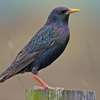
European Starlings, an invasive species, have been observed in Anchorage, Alaska, where they compete with native birds for resources. Their presence is concerning due to their aggressive behavior and potential to form large flocks, prompting local monitoring and reporting efforts.
Observation by Tee Marshall
Approximately 10 European Starlings were observed near the Northern Lights and Baxter Road neighborhood. They appear active in the mornings and evenings, often perching in small groups. Local birds in the area have been seen avoiding them or flying away when the starlings are present. Their calls are sharp and persistent — easy to identify once familiar.
European Starlings are a non-native, invasive species that compete aggressively with native birds for food and nesting sites. In some areas of the Lower 48, such as along I-35 in Texas, they have formed massive flocks numbering in the thousands. Anchorage may still be in the early stages of colonization, so early awareness is important.
Residents are encouraged to report sightings to platforms like eBird or iNaturalist to support monitoring efforts.
LEO Says
European Starlings have a long history in the United States, dating back to around 1877 when Shakespeare enthusiasts introduced them to Central Park in New York City. In Alaska, they were first spotted in Fairbanks in 1961 and became established in Anchorage by the early 2000s. The Alaska Department of Fish and Game (ADF&G) has been documenting sightings and greatly values identification reports. Tammy Davis has shared helpful information for those submitting reports through ADF&G’s online invasive species form.
Consultation by Tammy Davis
You may be interested to know that over the past five or so years, starlings are reported more than any other species to the ADFG online portal. Birds are pretty conspicuous and starlings certainly make their presence known, particularly when in large flocks.
I’m sharing the information I send to individuals who submit reports to the ADF&G Invasive Species Reporter.
"Thank you for reporting observations of EUROPEAN STARLINGS.
European starlings are known to be present in various locations in Alaska. Large flocks have been reported from Anchorage, where according to the Christmas Bird Count, starling numbers have risen dramatically over the past decade. Although ADF&G doesn’t have a management program for invasive birds, we’re interested to know where they have been observed outside of major urban centers.
As you may have experienced, starlings can be a nuisance, due to their noise and mess. They are aggressive, which means they scare away songbirds and take over feeding stations. They also are problematic because they compete with endemic birds for nesting holes, and they carry internal and external parasites that can be detrimental to native species.
If you or your neighbors enjoy having bird feeders, consider using starling-resistant varieties, switching to foods starlings don’t prefer or can’t eat, or remove food sources by putting feeders away until the starlings move on. Bird feeders are NOT recommended in most of Alaska during the months of April through October due to the likelihood of attracting bears to your neighborhood.
“Starling proof” feeders make it difficult for unwanted starlings to access food. Examples of these feeders include caged bird feeders with holes small enough to provide access to small songbirds but not starlings, weight sensitive feeders that have perches which can be set to allow only the weight of smaller birds, and upside-down suet feeders which woodpeckers will access but starlings tend to avoid.



 Observations From Members


 iNaturalist